Popular Posts

Wednesday, March 28, 2018

Sentence Pattern

Image result for sentence pattern
Sentence Pattern
What is sentence pattern?
Systematic arrangement of words in a sentence meaningfully is sentence pattern.
There are five basic patterns. They are:
1. SV ( Subject + Verb )
2. SVO ( Subject + Verb + Object )
3. SVIODO ( Subject + Verb + Indirect Object + Direct Object )
4. SVC ( Subject + Verb + Complement )
5. SVOC ( Subject + Verb + Object + Complement )

SUBJECT: Subject is a word or group of words in a sentence about which something is said.
VERB: Verb is a word or phrase expressing existence, action or occurrence.
COMPLEMENT: Complement is a word or phrase that usually come after a ‘be’ verb such as am, is, are, was and were to make the sense complete.
Sometimes COMPLEMENT comes after certain verbs such as become, turn, look, appear, feel, etc. OBJECT: Object is a word or phrase in a sentence towards which the action of the verbal element is directed.

If there are two objects in a sentence, the answer for the question WHAT? is DIRECT OBJECT(DO) and WHOM? is INDIRECT OBJECT (IDO).

 I. SV ( Subject + Verb )
Subject Verb
The bird flies.
The cattle are grazing.
The boy ran.
The girl was dancing.
 It will rain.

II. SVO ( Subject + Verb + Object )
 Subject Verb Object
The man sold his house.
My father is buying a new car.
His uncle runs a business.
Rahul loves his mother.
Madan spent all his money.

 III. SVIODO ( Subject + Verb + Indirect Object + Direct Object )
Subject Verb Indirect Object Direct Object
 The teacher taught us grammar.
My mother presented my friend a gift.
Rakesh wrote to his parents a letter.
My friend sent me a message
Sarvesh gave her advice.

IV. SVC ( Subject + Verb + Complement )
Subject Verb Complement
The rose is flower.
Football is a game.
Monica looked bewildered
Rajan remained a bachelor.
Mr. Kamalesh is an LIC agent.

 V. SVOC ( Subject + Verb + Object + Complement )
Subject Verb Object Complement
The parents named the child Angeline.
The Committee elected Krish their leader.
He painted his house yellow.
 They appointed him the captain.
 This programme will keep the audience spell bound.

Note: There are 144 patterns totally. They can be formed adding “Adjunct” to the basic patterns. ADJUNCT is the optional element in the sentence. It answers the questions How? Why? When? Where? (Note: The removal of adjunct would not harm the sense of the sentence)

VI. SVA ( Subject + Verb + Adjunct )
Subject Verb Adjunct
Mahesh got up early.
The Prime Minister arrives tomorrow.
Mani writes beautifully.
The accused will be tried next month.
My father works in Bangalore.

VII. SVOA ( Subject + Verb + Object + Adjunct )
Subject Verb Object Adjunct
The school organizes a tour to North India.
 The new Principal stated his policy clearly.
Everyone attends the meeting regularly.
 People throw the garbage on the road.
My daughter plays key board very well.

VIII. SVOAA ( Subject + Verb + Object + Adjunct + Adjunct )
Subject Verb Object Adjunct Adjunct
The peon rang the bell at 5 o’ clock in the evening.
The court began its session late in the morning.
The CEO will visit our school frequently this year.
The poor received help from the government today.
The Inspector enquired the criminal very pleasantly in the station.

IX. SVOCA ( Subject + Verb + Object + Complement + Adjunct )
 Subject Verb Object Complement Adjunct
The Rotarians elected Prabhakar President last month.
They made Shankar the chief of the council.
The parents named her Agnel through baptism.
The committee made me secretary of the school.
 They painted the museum red purposely.

 X. ASV ( Adjunct + Subject + Verb )
Adjunct Subject Verb
Now You may go.
Quickly they returned.
Tonight we shall relax.
Early morning they leave.
These days selfish people prosper.

XI. ASVO (Adjunct + Subject + Verb + Object )
 Adjunct Subject Verb Object
Every day he sends message.
Once a month I meet my parents.
Last time India won the world cup.
Every morning he recites the mantra.
Once while we must take rest.

XII. ASVC (Adjunct + Subject + Verb + Complement )
Adjunct Subject Verb Complement
 Usually she gets angry.
Occasionally he becomes restless.
Generally the boss is punctual.
Unfortunately the girl was sick.
Rarely the Doctor becomes uneasy.

XII. ASVIODO (Adjunct + Subject + Verb + Indirect Object + Direct Object )
Adjunct Subject Verb Indirect Object Direct Object
Yesterday she gave me a gift.
Last Monday Kala sent him a greeting card.
Last year the school gave the teachers mementoes.
Every year the govt. gives the students uniform.
This morning our teacher taughtus mathematics.

 XIII. ASVIODO (Adjunct + Subject + Verb + Object + Complement + Adjunct )
Adjunct Subject Verb Object Complement Adjunct
Yesterday the priest named her Beautrice in the church.
 Last week the CM called his minister efficient during the function.
Next month we will make Ganesh chairman of our company.
Tomorrow the committee will elect Sachin captain of our cricket team.
Last night Motilal dreamt a dream a hearty dream about his success.

XIV. AASVC (Adjunct + Adjunct + Subject + Verb + Complement)
Adjunct Adjunct Subject Verb Complement
Last week in CTS Leo was made a team leader.
Every morning in the assembly the students remain quiet.
In summer during May the Sun shines bright.
During winter in July the days are very chill.
 In the jungle in dark walking becomes difficult

Tuesday, February 27, 2018

Grammatical Sentence Types

Grammatical Sentence Types


Sentences can be classified in a number of ways—grammatically, rhetorically, functionally, and so on.
 
Phrase:
A group of words that may have a subject or a verb, but not both. (ex: in the beginning, to grow up, running around the room).
Dependent Clause:
A group of words that contains a subject and verb but does not express a complete thought. A dependent clause cannot be a sentence. Dependent clauses are sometimes referred to as subordinate clauses.
Independent Clause:
A group of words that contains a subject and verb and expresses a complete thought. An independent clause is a sentence. Independent clauses are sometimes referred to as mainclauses.
For more information on dependent and independent clauses, see the handout from the Purdue University Online Writing Lab, which is where I got the above definitions.
Here’s a quick rundown of the grammatical sentence types, along with an example or two of each.

Simple Sentence

The simple sentence has a single subject-verb pair. In other words, it has only one independent clause and no dependent clause. Example 1 below is obviously a simple sentence. Example 2’s single verb gives it away. But what about example 3? Isn’t it too long to be a simple sentence?

Examples:

  1. Gokul wept.
  2. Johnny threw the ball across the street.
  3. In the early morning, just before the breaking of the dawn, two lonely wanderers stretched their weary limbs and peered out of their makeshift tent.
I italicized the third example’s subject-verb pair so you can see that it really is just a simple sentence. The groups of words that come before the main part of the sentence are prepositional phrases, neither of them having a subject or a verb. Also, while there are two verbs in the independent clause (“stretched” and “peered”), they are both paired up with the same subject.

Compound Sentence

A compound sentence has two or more independent clauses, but it has no dependent clauses. The independent clauses can be joined by a semicolon; they can also be joined by a comma and a coordinating conjunction (and, or nor, for, but, yet, so).

Examples:

  1. Fred wanted to play basketball, but he didn’t make the team.
  2. He would never eat a tomato again, nor would he throw one.

Complex Sentence

Although a complex sentence has only one independent clause, it may have more than one dependent clauses.

Examples:

  1. Nancy was thrilled to receive the shoes that she ordered through the internet.
  2. I didn’t know what to say when I heard the news.

Compound-Complex Sentence

A compound-complex sentence, which may be the most difficult type to write, has more than one independent clause, and it has at least one dependent clause.

Examples:

  1. While Sally washed the dishes, John swept the floor, and James wiped the counters.
  2. Michael, who has been working on collaborative songwriting through the internet, thinks that the medium shows great promise, but Norah is not so sure about the quality that such an endeavor can produce.
Here’s a little table to show you the sentence types at a glance.
Number of Clauses by Sentence Type
 DependentIndependent
Single01
Compound02+
Complex1+1
Compound-Complex1+2+

CONVERT SIMPLE SENTENCE INTO COMPLEX SENTENCE

A simple sentence can be converted into a complex sentence by expanding a word or phrase into a subordinate clause - which can be a noun clause, an adjective clause or an adverb clause.
Noun clause
He liked my suggestion. (Simple sentence)
He liked what I suggested. (Complex sentence)
His advice did not prove successful. (Simple sentence)
What he advised did not prove successful. (Complex sentence)
Note that it is usually a noun or a noun equivalent that can be changed into a noun clause.
Adjective clause
There I saw a beautiful girl. (Simple sentence)
There I saw a girl who was beautiful. (Complex sentence)
A wounded tiger is very fierce. (Simple sentence)
A tiger that is wounded is very fierce. (Complex sentence)
You can notice that it is adjectives or adjective equivalents or appositional words or phrases that are generally converted into adjective clauses.
Adverb clauses
She was too poor to educate her children. (Simple sentence)
She was so poor that she could not educate her children. (Compound sentence)
On being challenged they ran away. (Simple sentence)
When they were challenged they ran away. (Complex sentence)
You will have noticed that it is adverb phrases and adverbs that are converted to adverb clauses.
Exercise
Convert the following simple sentences into complex sentences by changing the italicized words or phrases into clauses.
1. John admitted his guilt.
2. The principal is likely to punish him.
3. I have informed him of his success.
4. Alice is a said to be a good doctor.
5. His looks proclaim his innocence.
Answers
1. John admitted that he was guilty.
2. It is likely that the principal will punish him.
3. I have informed him that he has succeeded.
4. It is said that Alice is a good doctor.
5. His looks proclaim that he is innocent.

WORDS REPLACING 'VERY'


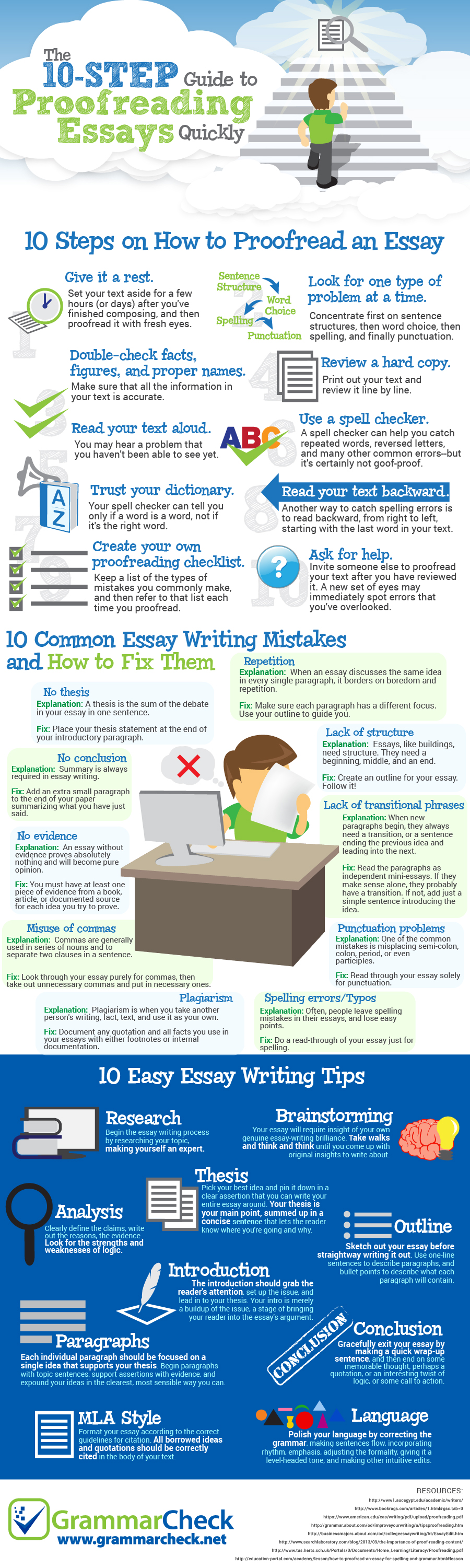
147 Words to Use Instead of 'Very' (Infographic)
Source: www.grammarcheck.net

Monday, January 8, 2018

PARTS OF SPEECH


Any language is used for communication. Our thoughts are shared by written or  oral communicative sentences. A sentence comprises of words arranged in proper order. So, learning "Parts of Speech" is essential for learning fundamental grammar.
There are 9 parts of speech in English grammar. They are 
1. Noun

2. Pronoun

3.Adjective

4. Determiner

5. Verb

6. Adverb

7. Preposition

8. Conjunction

9. Interjection

In British Grammar the determiners are included in adjectives. 
Hence we have 8 Parts of Speech according to British Grammar.

Friday, September 22, 2017

HELEN KELLER

Image result for helen keller and anne sullivan at the water pump
HELEN KELLER

Helen Keller was born in Alabama in 1880. When she was less than 2 years old, she became very ill. While she recovered from her illness, she lost her eyesight and hearing. When Helen was 7, her parents hired a teacher for her. The teacher, Annie Sullivan, was able to bring Helen out of her dark, silent world by teaching her sign language. Helen would feel each sign with her fingers to determine the meaning. Helen Keller would go on to be a writer, lecturer and activist.
Questions
1.     Where was Helen Keller born?
2.     How old was Helen Keller when she lost her eyesight and hearing?
3.     Who was Helen Keller’s teacher?