I teach Maths, English Grammar and Spoken English efficiently. My wish is to teach the children of all countries online. My classes will be interactive and interesting. I render assignment help and proof reading through e-mail learning and whatsapp learning. skype id: selviraveendran mail id : onlinetutorselviraveendran@gmail.com Whatsapp No: 9442624629
Popular Posts
-
 SENTENCE PATTERNS WITH EXAMPLES Subject (S) Verb (V) Object (O) Complement (C) Adverbial (A) Direct Object (DO) Indirect...
 -
 Sentence Pattern - Exercise Identify the pattern of the following sentence : 1.She / will come a) SV b) SVO c) SVC d) SVO...
 -
7 Basic Sentence Patterns The English language has seven basic sentence (or clause) patterns. Examples are: John / laughed. (SV)*...
-
Sentence Pattern: What is sentence pattern? Systematic arrangement of words in a sentence meaningfully is sentence pattern...
-
 TYPES OF SENTENCES In writing and speaking, there are four basic types of sentences that we use for different purposes: declarati...
 -
 FINITE AND NON-FINITE VERBS Identify the finite and non-finite verbs in the following sentences. 1. My little brother wants to be ...
 -
 PHRASES WORKSHEET Identify the phrases in the following sentences and state their kind 1. He was a man of great wealth. 2. Th...
 -
English Grammar Worksheets Free PDF ebook Download from Larisa School of Language Nikolaev Ukraine over One Hundred Pages from Laris...


Friday, March 20, 2015


Monday, March 16, 2015
US COINS AND CURRENCY
US CURRENCY -
EXPLANATION
US Coins and Currency
|
Value
|
Image
|
Obverse
|
Reverse
|
|
Coins
|
|||
|
Penny
1¢ |
  |
Abraham Lincoln
16th U.S. President |
The Lincoln Memorial
|
|
Nickel
5¢ |
|
Thomas Jefferson
3rd U.S. President |
Monticello
Jefferson's home |
|
Dime
10¢ |
 |
Franklin Delano Roosevelt
32nd U.S. President |
Olive Branch,
Torch, Oak Branch. |
|
Quarter
25¢ |
 |
George Washington
1st U.S. President |
American Bald Eagle
|
|
Half-Dollar
50¢ |
 |
John F. Kennedy
35th U.S. President |
The Presidential Seal
|
|
Silver Dollar
$1 |
 |
Susan B. Anthony
|
Apollo 11 Insignia, Eagle
|
|
Golden Dollar
$1 |
 |
Sacagawea
|
Soaring Eagle and 17
Stars
|
|
Currency
|
|||
|
$1
|
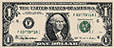 |
George Washington
1st U.S. President |
The Great Seal of the
United States
|
|
$2
|
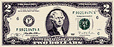 |
Thomas Jefferson
3rd U.S. President |
Signing of the
Declaration of Independence
-or- Monticello |
|
$5
|
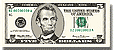 |
Abraham Lincoln
16th U.S. President |
Lincoln Memorial
|
|
$10
|
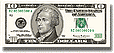 |
Alexander Hamilton
1st U.S. Treasury Secretary |
U.S. Treasury
|
|
$20
|
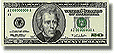 |
Andrew Jackson
7th U.S. President |
The White House
|
|
$50
|
 |
Ulysses S. Grant
18th U.S. President |
U.S. Capitol
|
|
$100
|
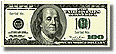 |
Benjamin Franklin
|
Independence Hall
|
|
$500*
|
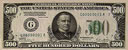 |
William McKinley
25th U.S. President |
"Five Hundred
Dollars"
|
|
$1,000*
|
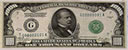 |
Grover Cleveland
22nd/24th U.S. President |
"One Thousand
Dollars"
|
|
$5,000*
|
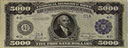 |
James Madison
4th U.S. President |
"Five Thousand Dollars"
|
|
$10,000*
|
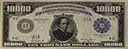 |
Salmon P. Chase
25th U.S. Treasury Secretary |
"Ten Thousand
Dollars"
|
|
$100,000*
|
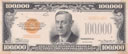 |
Woodrow Wilson
28th U.S. President |
"One Hundred
Thousand Dollars"
|
Saturday, March 14, 2015
Monday, March 2, 2015
Thursday, February 26, 2015
Tuesday, February 24, 2015


TRAITS OF MATHEMATICALLY ABLE CHILDREN

TRAITS OF MATHEMATICALLY ABLE CHILDREN
• Ability to make and use
generalisations—often quite quickly. One of the basic abilities, easily
detectable even at the level of primary school: after solving a single example
from a series, a child immediately knows how to solve all examples of the same
kind.
• Rapid and sound memorisation of
mathematical material.
• Ability to concentrate on mathematics
for long periods without apparent signs of tiredness.
• Ability to offer and use multiple
representations of the same mathematical object. (For example, a child switches
easily between representations of the same function by tables, charts, graphs,
and analytic expressions.)
•
An instinctive tendency to approach a problem in different ways: even if a
problem has been already solved, a child is keen to find an alternative
solution.
• Ability to utilise analogies and make
connections.
• Preparedness to link two (or more)
elementary procedures to construct a solution to a multi-step problem.4 A. V.
BOROVIK AND A. D. GARDINER
• Ability to recognise what it means to
“know for certain”.
•
Ability to detect unstated assumptions in a problem, and either to explicate
and utilise them, or to reject the problem as ill-defined.
• A distinctive tendency for “economy of
thought,” striving to find the most economical ways to solve problems, for
clarity and simplicity in a solution.
• Instinctive awareness of the presence
and importance of an underlying structure.
• Lack of fear of “being lost” and having
to struggle to find one’s way through the problem.
• A tendency to rapid abbreviation,
compression or a curtailment of reasoning in problem solving.
• An easy grasp of encapsulation and
de-encapsulation of mathematical objects and procedures. These terms are less
frequently
Monday, February 23, 2015
Top 4 Basic Math Skills Students Should Learn

Top 4 Basic Math Skills Students Should Learn
Here are the top 4 basic math skills every student
should learn.
Problem solving.
You don't learn this from the time you start learning math. But this is a basic
skill that each student should learn as it enables them to develop analytical
thinking. There are certain situations in life that allow you to be analytical
and it is crucial when making decisions. This is a skill in math we all have to
develop to hone and enhance our analytical brains to be able to analyze
situations more before acting upon it.
Applied Math. This
is something every student should learn - applying math in everyday situations.
Everyday we are presented with different math situations and students should be
able to handle those with confidence. This skill will also help students
appreciate the importance of math even more as they can relate it to their
everyday life.
Estimation and
approximation. This is one skill you will put to use almost everyday.
Measurements are everywhere and whatever it is you are buying you are at some
point estimating and making approximations. Math teaches you techniques on
estimating and approximating length, distance, quantity, weight, and many
others that you will eventually use on some days or everyday. Such skill will
allow you to know when measurement is already precise or accurate for any
purpose you might need it to be.
Necessary
computational skills. This is by far among the very important basic math skills
you should be able to learn and understand. Everyday situations require you to
be knowledgeable in computations of whole numbers or fractions, decimals and
this should be done without any calculator. Most of the time people hardly
bring calculator with them when they go shopping thus mental computation is a
must learn skill. Also, it can be a hassle trying to run through all of the
things inside your bag just to look for your reliable calculator especially
when you are in a hurry. Basic mental computation is a must to solve daily
computational problems without any hassle.
Math Teacher Web Sites
11. MathsNet
12. Maze Splash
13. MegaMath
16. NCTM -
Principles and Standards for School Mathematics - Electronic edition
17. Plane Math
Friday, February 20, 2015
Verb patterns with to-infinitives

Verb patterns with to-infinitives
Verb patterns with to-infinitives
To-infinitives are used in several structures. Here is a quick overview of them.
To-infinitives can be used after adjectives expressing ideas such as desire or emotion.
We were happy to see him.
She is afraid to talk.
He is eager to join the army.
I will be happy to accept your invitation.
He was anxious to meet you.
They are impatient to leave.
She is afraid to talk.
He is eager to join the army.
I will be happy to accept your invitation.
He was anxious to meet you.
They are impatient to leave.
It + be + adjective + of + noun/pronoun + to-infinitive
The adjectives that are commonly used in this pattern are: good, kind, generous, stupid, unwise, wrong, brave, politely, silly, wicked, cruel, foolish, wise, nice, careless etc.
It is kind of you to help us.
It was foolish of me to lend him money.
It was foolish of me to lend him money.
It was clever of you to solve this puzzle.
It is wicked of her to do such things.
It was careless of you to make that mistake.
It is unwise of him to drink too much.
It is wicked of her to do such things.
It was careless of you to make that mistake.
It is unwise of him to drink too much.
To-infinitives are words like difficult, easy, hard, impossible etc.
This book is easy to understand.
This carpet is difficult to wash.
Your actions are impossible to justify.
This food is difficult to swallow.
This medicine is pleasant to taste.
His speech was difficult to understand.
This carpet is difficult to wash.
Your actions are impossible to justify.
This food is difficult to swallow.
This medicine is pleasant to taste.
His speech was difficult to understand.
It + be + adjective + to-infinitive
It is easy to learn English.
It is difficult to get a job.
It is cruel to treat animals in that way.
It was impossible to win.
It is hard to get noticed.
It is difficult to get a job.
It is cruel to treat animals in that way.
It was impossible to win.
It is hard to get noticed.
Subscribe to:
Posts (Atom)