I teach Maths, English Grammar and Spoken English efficiently. My wish is to teach the children of all countries online. My classes will be interactive and interesting. I render assignment help and proof reading through e-mail learning and whatsapp learning. skype id: selviraveendran mail id : onlinetutorselviraveendran@gmail.com Whatsapp No: 9442624629
Popular Posts
-
 SENTENCE PATTERNS WITH EXAMPLES Subject (S) Verb (V) Object (O) Complement (C) Adverbial (A) Direct Object (DO) Indirect...
 -
 Sentence Pattern - Exercise Identify the pattern of the following sentence : 1.She / will come a) SV b) SVO c) SVC d) SVO...
 -
7 Basic Sentence Patterns The English language has seven basic sentence (or clause) patterns. Examples are: John / laughed. (SV)*...
-
 TYPES OF SENTENCES In writing and speaking, there are four basic types of sentences that we use for different purposes: declarati...
 -
Sentence Pattern: What is sentence pattern? Systematic arrangement of words in a sentence meaningfully is sentence pattern...
-
 FINITE AND NON-FINITE VERBS Identify the finite and non-finite verbs in the following sentences. 1. My little brother wants to be ...
 -
 PHRASES WORKSHEET Identify the phrases in the following sentences and state their kind 1. He was a man of great wealth. 2. Th...
 -
English Grammar Worksheets Free PDF ebook Download from Larisa School of Language Nikolaev Ukraine over One Hundred Pages from Laris...


Tuesday, December 8, 2015


DICKINSON’S POETRY
DICKINSON’S
POETRY
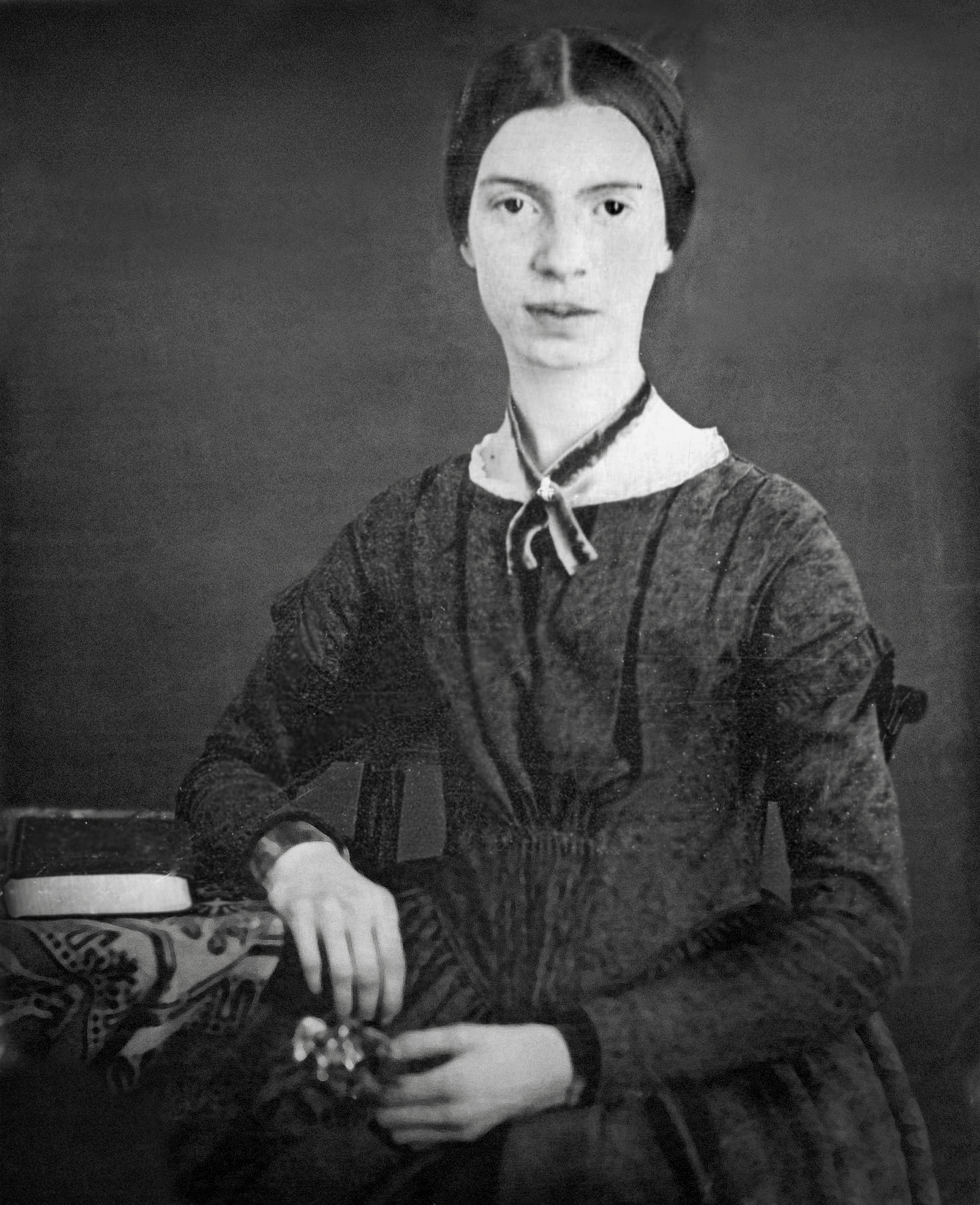
Emily Dickinson
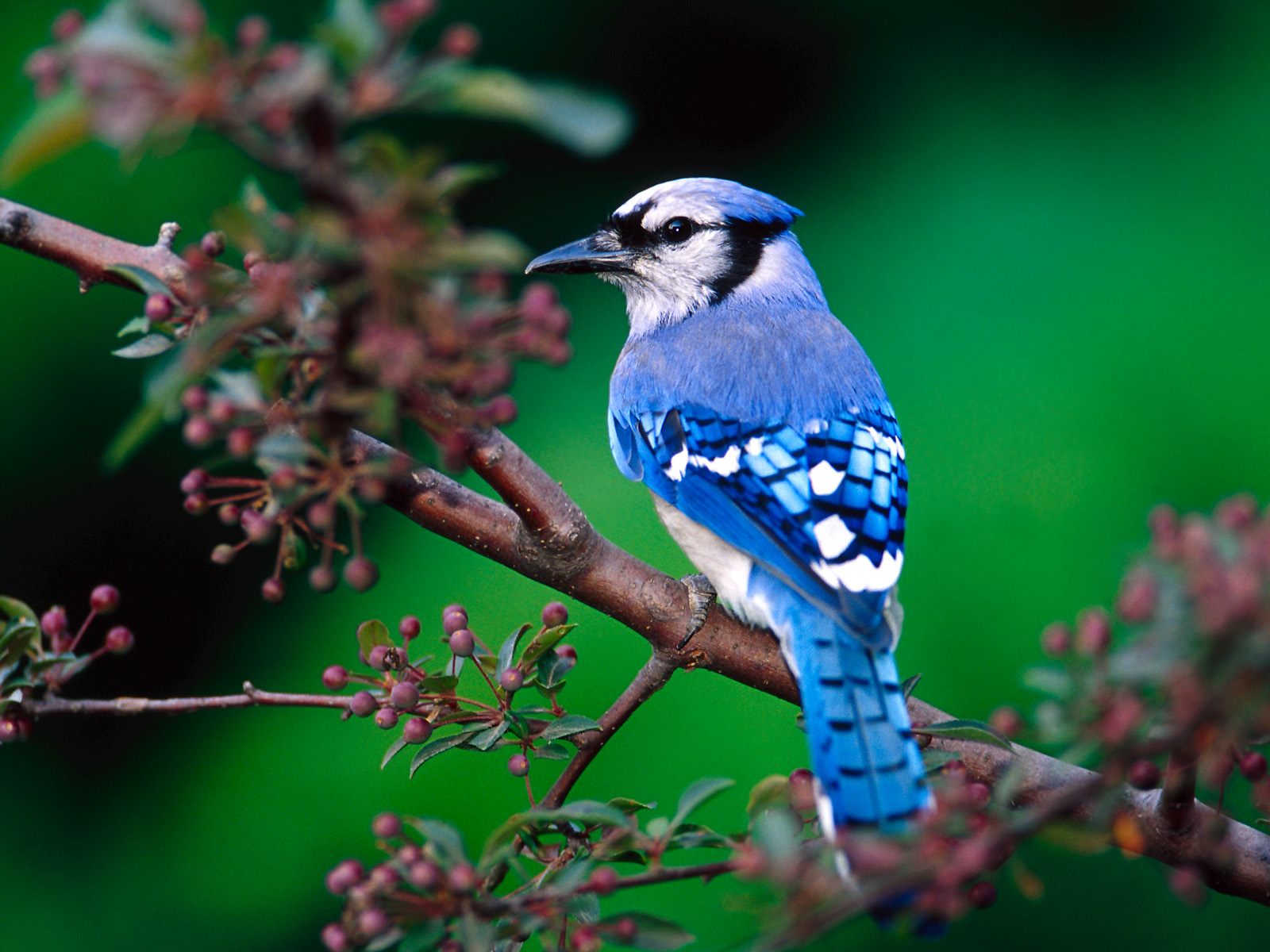
“ ‘Hope’ is the thing
with feathers—...”
“Hope is the Thing with feathers” was first published in
1891. Without ever actually using the word “bird” but once, Dickinson
likens hope itself to a creature of flight. The language of the first two
lines suggests the weightlessness that hope brings with it: the upward motion
of the wind ruffling through feathers; the lightness of a tiny bird on its
perch, ready at a moment’s notice to flutter away.
The poem sings of the robust, enduring nature of hope.
The picture of a tiny bird against gargantuan storms and gales reminds the
reader of the immense power that even the smallest fragment of hope can hold,
no matter how deep in the soul it is buried. Dickinson contrasts the
“chill[y],” “strange” possibilities of the world we all face with the sweetness
and warmth of the little bird.
The tone of this poem is quite characteristic of
Dickinson. Although she spent much of her life in seclusion and her
experiences were limited, she was a dreamer and many of her poems glowed with
promise and possibility. “’Hope’ is the thing with feathers” simply and
eloquently acknowledges the enduring human capability for hope.
Emily Dickinson (1830-1886) was born in Amherst,
Massachusetts. She lived a quiet, secluded life and suffered occasionally
from bouts of depression. Because the world she inhabited was small, her
subject matter was limited but focused. Her garden was one of her
greatest passions and appeared often in her writing. This seclusion also
influenced her poetic voice – her poetry sings of the possibility of dreams not
yet realized. Very few of Dickinson’s poems were published when she was
alive, and the depth of her poetry was not known until her family discovered
her collection of poems after her death. Today, Dickinson is one of the
most appreciated American poets. She is often admired for her efficient
yet brilliant word choice and for defying the rigidity in form that limited
many writers before her, though she leans heavily on Common (or hymnal)
measure, with its 8-6-8-6 syllables and abab (however slant or subverted)
rhyme.
Johnson’s edition of The Complete Poems of Emily
Dickinson is readily available (including with Amazon) and includes all
1775 of her poems. Her letters are available in his edition of Final
Harvest.
Summary
The speaker
describes hope as a bird (“the thing with feathers”) that perches in the soul.
There, it sings wordlessly and without pause. The song of hope sounds sweetest
“in the Gale,” and it would require a terrifying storm to ever “abash the
little Bird / That kept so many warm.” The speaker says that she has heard the
bird of hope “in the chillest land— / And on the strangest Sea—”, but never, no
matter how extreme the conditions, did it ever ask for a single crumb from her.
Form
Like almost all of
Dickinson’s poems, “ ‘Hope’ is the thing
with feathers—...” takes the form of an iambic trimeter that often expands to
include a fourth stress at the end of the line (as in “And sings the tune
without the words—”). Like almost all of her poems, it modifies and breaks up
the rhythmic flow with long dashes indicating breaks and pauses (“And never
stops—at all—”). The stanzas, as in most of Dickinson’s lyrics, rhyme loosely
in an ABCB scheme, though in this poem there are some incidental carryover
rhymes: “words” in line three of the first stanza rhymes with “heard” and
“Bird” in the second; “Extremity” rhymes with “Sea” and “Me” in the third
stanza, thus, technically conforming to an ABBB rhyme scheme.
Commentary
This simple,
metaphorical description of hope as a bird singing in the soul is another
example of Dickinson’s homiletic style, derived from Psalms and religious
hymns. Dickinson introduces her metaphor in the first two lines (“ ‘Hope’ is the thing with feathers— /
That perches in the soul—”), then develops it throughout the poem by telling
what the bird does (sing), how it reacts to hardship (it is unabashed in the
storm), where it can be found (everywhere, from “chillest land” to “strangest
Sea”), and what it asks for itself (nothing, not even a single crumb). Though
written after “Success is counted sweetest,” this is still an early poem for
Dickinson, and neither her language nor her themes here are as complicated and
explosive as they would become in her more mature work from the mid-1860s. Still, we
find a few of the verbal shocks that so characterize Dickinson’s mature style:
the use of “abash,” for instance, to describe the storm’s potential effect on
the bird, wrenches the reader back to the reality behind the pretty metaphor;
while a singing bird cannot exactly be “abashed,” the word describes the effect
of the storm—or a more general hardship—upon the speaker’s hopes.
Dickinson is using metaphor of
a small bird to carry her point that hope stays alive within us despite all of
our troubles and, like a small bird that sings in the face of the strongest
wind and most powerful storm, hope never asks for anything from us--it is just
there to help us when we need it.
In the first stanza, Dickinson says that hope, like the bird
singing a tune, doesn't necessarily speak to us in any conventional sense but
is always present in us. Most important from Dickinson's point of view is
that hope "springs eternal" (a cliche, but true nonetheless), that
is, hope is a permanent fixture of our being that allows us to conquer most of
what life throws at us.
The second stanza deals with the power of hope:the more the wind
howlsl and the storm rages, the sweeter is the bird's song. The poet has
a hard time imagining a storm so strong that it could overcome the power of the
bird's song, so Dickinson would argue that hope, which has kept so many people
from despair, can overcome any suffering.
When Dickinson says in the third stanza that the little bird,
despite having to endure "the chillest land" and "strangest
sea," has never asked for any payment, Dickinson is simply reminding us of
hope's inherent power--it is always there, requires no maintenance, and is
strong enough to see us through our troubles.
The metaphorical use of natural elements--in this case, the
small bird--is a hallmark of Dickinson's poetic technique. Often, when
Dickinson deals with relatively abstract concepts like hope, love, and death,
she uses a concrete image from nature to make more real something that is
difficult to "see."
Sunday, November 29, 2015
GW English News: POEM OF THE DAY: MARY OLIVER’S “WILD GEESE”
GW English News: POEM OF THE DAY: MARY OLIVER’S “WILD GEESE”: Wild Geese You do not have to be good. You do not have to walk on your knees for a hundred miles throug...
MARY OLIVER’S POEM “WILD GEESE” - AN ANALYSIS


Mary Oliver’s poem “Wild Geese” begins with a reminder to the reader, or a revelation to some, that we do not have to be good. Whatever guilt, shame, whatever confessions we hold inside, can be let go. We do not always have to repent, either. Why? Because we, too, are animals like the wild geese. Instead of suffering, or spending our lives trying to find forgiveness, we only have to do what we love to do. This is a relief to the reader, and after reading the first few lines we are softened, ready for whatever comes next.
Then Oliver writes, “Tell me about
despair, yours, and I will tell you mine…” Everybody has his or her own
despair, everybody needs to be told we do not have to be good, everybody would
have a reason to repent. Talking about our troubles can help us heal from them,
and hearing other people’s pain can create a primal connection between two
people, loyal and deep like the bond between birds.
“Meanwhile the world goes on.” The
repetition of the word ‘meanwhile’ soothes and is, in the poem, cyclical like
rainfall in natural. This is also how Oliver’s natural imagery comes through:
the reader can see the movement of the rain across America, across the world
even – like humans and wild geese, the rain also travels. The geese are travelling
home again, but where is home? Are they flying ‘home’ south for the winter, or
‘home’ back north?
It is as if Oliver understands this
question that her work asks, and so she writes, “Whoever you are, no matter how
lonely…” Oliver has no specific direction that points toward home, but rather,
notes that it does not matter where you call home. Oliver invites the reader to
listen to what the world tells us, contrasting and comparing us with wild
geese, who fly alone yet in an inclusive form, honking to keep in contact with
each other in flight, connected in the “family of things.”
“Wild Geese” embodies
everything that I value in a poem: captivating opening lines; carefully chosen
and concise language; similes and repetition; natural imagery; enough room for
the reader to understand Oliver’s point of view while still imposing their own;
and ending lines that make the reader feel complete. Her work pulls the reader
out of a moment in our pressured world, and puts us into another moment – one
vastly more real, more understanding.
THE ROAD NOT TAKEN BY ROBERT FROST: SUMMARY AND ANALYSIS
Robert Frost: Poems Summary and Analysis
of "The Road Not Taken" (1916)
The narrator comes upon a fork in the
road while walking through a yellow wood. He considers both paths and concludes
that each one is equally well-traveled and appealing. After choosing one of the
roads, the narrator tells himself that he will come back to this fork one day
in order to try the other road. However, he realizes that it is unlikely that
he will ever have the opportunity to come back to this specific point in time because
his choice of path will simply lead to other forks in the road (and other
decisions). The narrator ends on a nostalgic note, wondering how different
things would have been had he chosen the other path.
Analysis
This poem is made up of four stanzas of five lines, each with a
rhyme scheme of ABAAB. Along with “Stopping by Woods on a Snowy Evening,” this
poem is one of Frost’s most beloved works and is frequently studied in high
school literature classes. Since its publication, many readers have analyzed
the poem as a nostalgic commentary on life choices. The narrator decided to
seize the day and express himself as an individual by choosing the road that
was “less traveled by.” As a result of this decision, the narrator claims, his
life was fundamentally different that it would have been had he chosen the more
well-traveled path.
This reading of the poem is extremely popular because every
reader can empathize with the narrator’s decision: having to choose between two
paths without having any knowledge of where each road will lead. Moreover, the
narrator’s decision to choose the “less traveled” path demonstrates his
courage. Rather than taking the safe path that others have traveled, the
narrator prefers to make his own way in the world.
However, when we look closer at the text of the poem, it becomes
clear that such an idealistic analysis is largely inaccurate. The narrator only
distinguishes the paths from one another after he has already selected one and
traveled many years through life. When he first comes upon the fork in the
road, the paths are described as being fundamentally identical. In terms of
beauty, both paths are equally “fair,” and the overall “…passing there / Had
worn them really about the same.”
It is only as an old man that the narrator looks back on his
life and decides to place such importance on this particular decision in his
life. During the first three stanzas, the narrator shows no sense of remorse
for his decision nor any acknowledgement that such a decision might be
important to his life. Yet, as an old man, the narrator attempts to give a
sense of order to his past and perhaps explain why certain things happened to
him. Of course, the excuse that he took the road “less traveled by” is false,
but the narrator still clings to this decision as a defining moment of his
life, not only because of the path that he chose but because he had to make a
choice in the first place.
The Road not Taken
by Robert Frost: Summary and Analysis
Here is a summary and analysis of ‘The Road not Taken’ by Robert
Frost, the celebrated poem on making choices in life.
Robert
Frost’s The Road
not Taken is a beautiful poem about
making choices in life. It discusses the very common situation of coming to the
crossroads and not knowing which way to choose. Like all Frost poems it begins
in delight and ends in wisdom.
One
morning the poet came to a junction where two roads diverged in a yellow wood.
He stood for a long time there, wondering which way to choose. He was sorry
that he could not travel both roads. After considering the prospects of both
roads, he took the second one because it was grassy and less travelled by. He
kept the first road for another day. But he doubted if he should ever come back
because one way leads to another way.
The poem
ends quite dramatically when the poet hopes that later in his life he will be
able to say with a sigh of relief that choosing the road less traveled by has
made all the difference in his life. (Or, is it a sigh of dismay? The reader is
left to guess for himself.)
Analysis of The Road not Taken: On the surface the poem is autobiographical, showing Frost’s
bold choice to become a poet. He had tried his hands at many things and it was
later in his life that he achieved success as a poet. But it is also
philosophical, showing the great human dilemma in making a choice, especially
when it is the road less traveled by. But many of the critics are of the
opinion that Frost wrote the poem to make fun of a friend who would always
procrastinate at the crossroads.
Traditional
Elements in a Modernist Poem
There are several things in this poem that are
usually seen in traditional, not modernist, poetry. First of all, you probably
noticed that the poem rhymes. In fact, it follows a traditional rhyme pattern.
What do I mean by that? Well, you'll notice that in each stanza there are five
lines. The first, third and fourth lines rhyme with each other, and the second
and fifth lines rhyme with each other. This type of rhyme pattern is usually
summed up as 'ABAAB.' The 'A's represent the lines that rhyme with each other;
likewise, the two lines that are labeled 'B' rhyme with each other.
Besides rhyme, the poem has a traditional meter, or rhythm. Each line has a
specific number of syllables, and certain syllables are stressed when they are
read. Meter is something that Frost liked to use a lot, even when he didn't use
rhyme.
This poem follows a traditional, not a
modernist rhyme pattern.
|
A third, and very important, element in this
poem that is not normally seen in modernist poetry is its use of natural imagery. The poem is
about someone alone in the woods, and all the descriptions are of nature.
Though most modernist poets did not spend a lot of time describing nature,
Frost lived in a rural setting, and most of his poems focused on nature.
Contradiction
and Interpretation in the Poem
So with all those elements of traditional
poetry, what makes this poem modern? Well, for one thing, the language is very
basic. But the most important modernist elements of this poem have to do with
the poem's meaning: there are a lot of things that aren't clear in the poem,
and the mood of the poem is not necessarily uplifting. First, let's look at the
way Frost makes the poem unclear. In the second stanza, he describes one of the
paths as 'grassy and wanted wear.' In other words, fewer people had gone down
that path than the other path.
But almost immediately, he contradicts himself:
the next lines say that the two paths were worn 'really about the same.' And at
the beginning of the next stanza, he says that both paths 'equally lay/In
leaves no step had trodden black.' So not only were both paths free of the
footsteps of people, they were both covered in leaves, despite the fact that he
had just described one of them as grassy. And the story changes again in the
famous last words of the poem:
'The Road Not Taken' by Robert Frost is a well-known poem about
the journey of life. This lesson will cover a brief summary of the poem,
analyze its major theme, and test your knowledge with a quick quiz.
Poem
Summary
Have you ever found yourself caught between a
rock and a hard place, trying to make a difficult decision? Maybe you've had to
choose between two equally desirable things, like following a career path to
become an astronaut or a doctor. You may have considered the different paths of
study or activity each choice would lead you down. We've all been faced with
challenging decisions in our lives, and sometimes the difficulty of making
those decisions arises from the fear of not knowing if what we choose is right,
or what will happen as a result of our choice.
Well, the famous American poet, Robert Frost, once wrote
a poem that describes this feeling exactly. 'The Road Not Taken', first
published in 1916, is perhaps Frost's most famous poem. The final lines in
particular, 'Two roads diverged in a yellow wood and I - I took the one less
traveled by, and that has made all the difference', are often quoted and
referred to as inspirational words that challenge us to overcome obstacles in
life.
The poem describes someone standing at a fork,
or turning point, in a road in the woods, trying to decide which path he's
going to take. He looks down one road as far as he can see, and after thinking
for another minute, decides to take the other one because it looks like
nobody's been that way yet, and he's curious about where it leads.
He thinks maybe he might come back another day
and try out the other path but has a feeling that the road he's chosen will
lead him to new places and discoveries, and he probably won't be back. He
thinks wistfully about that road, the road not taken, and where he might have
wound up if he'd gone that way instead. Part of him regrets his decision, but
he also realizes that the things he's seen and the places he's gone because of
the direction he chose has made him who he is.
The
Poem's Theme
'The Road Not Taken' is more than a poem about
someone trying to decide which road he's going to take on a stroll through the
woods. It's actually a poem about the journey
of life. The two roads
diverged in a yellow wood symbolize a
person's life. The narrator's choice about which road to take represents the
different decisions we sometimes have to make and how those decisions will
affect the future. Think of the expression, 'down the road', that we often use
to describe something that might happen months or even years from now, and
you'll see how Frost is making the connection between life and traveling.
Frost captures the uncertainty about making
decisions and our natural desire to know what will happen as a result of the
decisions we make in the first stanza of the poem:
'Two roads diverged in a yellow wood
And sorry I could not travel both
And be one traveler, long I stood
And looked down one as far as I could
To where it bent in the undergrowth'
Here, Frost uses the bend in the road as a
metaphor for what the narrator wishes he could see but ultimately can't make
out in the undergrowth. The narrator eventually decides to take the other road
because it really doesn't matter; whichever path he chooses, he has no way of
knowing where he's going to end up.
The only difference between the two roads is
that the one the narrator chooses in the second stanza is 'grassy and wanted
wear'; in other words, it doesn't look like anyone's taken it before or in a
long time. At this point in the poem, Frost tries to encourage readers to overcome
the fear of the unknown: someone has to be the first person to try a new thing.
Just think about what has happened when men and women have boldly gone where no
men and women have gone before.
Thursday, November 26, 2015
POEM COMPREHENSION - ME ON A HIGH WIRE
ME ON A HIGH WIRE
by John McInnes
Me on a high wire,
Setting out surely,
Making each movement
Seem easy and safe.
You down below me,
Sensing my caution,
Hoping each movement
Is easy and safe.
Me on a high wire,
Costumed and spotlit,
Full concentration
On each balanced
move.
You down below me,
Tensing and motionless,
Full concentration
On each balanced move.
Me on a high wire,
Letting a foot slip
Only a fraction,
Awakening your fear.
Me, the performer,
Taking my chances,
Exciting my talent
To share it with you.
You the observer,
Cheering me silently,
Sharing success with
me,
Eyeing me on.
Me on a high wire,
Taking the last step,
Stretching to finish
My journey for us.
You down below me,
Gasping, applauding me,
Sending a thank you
For what I have done.
Me bowing, thank you
For letting me share it—
The feel of the high wire,
The feel of performing—
High performance!
1. What central idea does the poem illustrate?
A. the dangers of the
high wire act
B. the performer’s relationship to the audience
C. how exciting
watching a high wire act can be
D. how the performer
must concentrate to balance
2. Which of the
following adjectives best describes the performer?
A. hopeful
B. grateful
C. nervous
D. confident
3. Why does the poet alternate the stanzas between “Me” and
“You”?
A. to show that the audience is afraid
B. to link the performer to the observer
C. to demonstrate the performer’s bravery
D. to emphasize the distance between the performer and the
audience
4. Which line in the poem most strongly suggests that the
performer deliberately tries to play with the audience’s feelings?
A. “Sensing my caution”
B. “Letting a foot slip”
C. “Taking the last
step”
D. “Stretching to
finish”
CBSE Papers, Questions, Answers, MCQ ...: CBSE Class 6 - 12: English Grammar - Confusing Sen...
CBSE Papers, Questions, Answers, MCQ ...: CBSE Class 6 - 12: English Grammar - Confusing Sen...: Confusing Sentences 1 . To go to school - to get education . e.g. Sheila is going to school. (It means Sheila is studying there)...
CBSE Papers, Questions, Answers, MCQ ...: CBSE Class 10 - English- SA1- Sample Question Pape...
CBSE Papers, Questions, Answers, MCQ ...: CBSE Class 10 - English- SA1- Sample Question Pape...: CBSE Class 10 - English- SA1- Sample Question Paper (2015-16)
CBSE Papers, Questions, Answers, MCQ ...: CBSE Class 8/9/10/CTET - English Comprehension (Un...
CBSE Papers, Questions, Answers, MCQ ...: CBSE Class 8/9/10/CTET - English Comprehension (Un...: Reading Comprehension (Unseen Poem) Q1( CTET 2012 ): Directions: Read the poem given below and answer the questions that follow by se...
Wednesday, November 25, 2015
TALKING ABOUT THINGS YOU HAVE DONE AND YOU WANT TO DO
TALKING
ABOUT THINGS YOU HAVE DONE AND YOU WANT TO DO
I have + (past
participle)
This structure is used
to talk about things that you have done in the past.
·
I’ve done it.
·
I’ve tried
parasailing.
·
I have visited
Australia.
·
She has acted in a
film.
·
I’ve watched that
film.
·
She’s written several
books.
·
I’ve written twelve
letters since morning.
·
I’ve been to this
place before.
·
I’ve seen him before.
Talking about things
you want to do
I wanna + (verb)
The structure wanna is
the conversational equivalent of want to. The structure I wanna can be used to
talk about things you want to do.
·
I wanna talk to you.
(= I want to talk to you.)
·
I wanna find a job. (=
I want to find a job.)
·
I wanna marry you. (=
I want to marry you.)
·
I wanna try this food.
(= I want to try this food.)
The structure ‘don’t
wanna’ is used to talk about things that you don’t want to do.
·
I don’t wanna accept
this job. (= I don’t want to accept this job.)
·
I don’t wanna marry
you. (= I don’t want to marry you.)
·
I don’t wanna meet
him. (= I don’t want to meet him.)
Talking about things
you have to do
I gotta + (verb)
The word gotta is the
conversational equivalent of got to. In conversation I gotta is often used
instead of I have got to.
·
I gotta get up early
tomorrow. (= I have got to get up early tomorrow.)
·
I gotta win her trust.
(= I have got to win her trust.)
·
I gotta get my car
repaired. (= I have got to get my car repaired.)
Subscribe to:
Posts (Atom)